


Best Rose Water in India (2026): Our Picks and How to Choose a Pure One

By the Aurella Belle team · Updated 28 October 2026
Disclosure: This guide is written by Aurella Belle, which makes Rooh-e-Gulab rose water, so we have put our own product first. The other picks are well-known rose waters sold in India, and the 7-point check below is brand-neutral, so you can judge every bottle on this list, including ours.
Quick answer: The best rose water in India for your face is one whose ingredient list starts with rose flower water (often written Rosa Damascena Flower Water), is steam distilled, has no alcohol or added "parfum", comes in a spray so you don't touch it, and is honest about any preservative it needs to stay safe. Judge it by the label and the price per ml, not by the brand name.
Best rose water in India: our picks
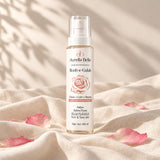
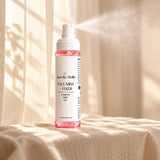
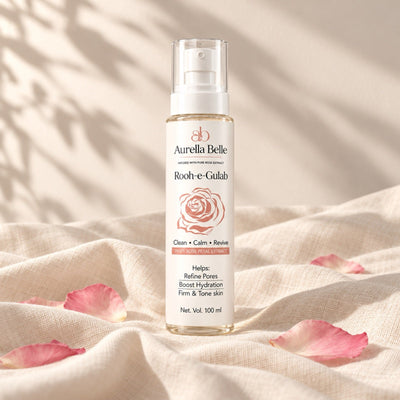
1. Aurella Belle Rooh-e-Gulab Rose Water Face Mist & Toner
Rooh-e-Gulab is our rose water face mist and toner, made with 99.5% rose petal extract and steam distilled. It is alcohol-free, with no parabens or silicones, and is cruelty-free and vegan. It comes in a fine-mist spray, so you never dip cotton or fingers into the bottle.
- Best for: daily toning, a midday refresh and setting makeup
- Sizes: 100 ml at Rs. 379 (Rs. 3.79 per ml) and a 50 ml travel size at Rs. 249
- Why it is first on our list: it is the one we make, and it passes the checks below that we can state from our own formula: rose content, steam distillation, no alcohol and a hygienic spray
Ask us for the full ingredient list if you want to check the remaining 0.5% before you buy.
2. Kama Ayurveda Pure Rose Water
A rose water from a well-known Ayurveda brand, sold online and in its own stores. A good choice if you want a classic gulab jal from a premium Ayurveda label. Check the bottle type and the ingredient list against the 7 points below.
3. Forest Essentials Facial Tonic Mist (Pure Rosewater)
A luxury Ayurveda option sold as a facial mist. It suits people who want a gift-worthy bottle and don't mind a higher price per ml. Compare its price per ml with the others on this list.
4. Dabur Gulabari Rose Water
The familiar budget pick found in most chemists and kirana stores. It is easy to buy and inexpensive. Several Gulabari variants exist, so read the ingredient list of the one you pick, especially for alcohol and added fragrance.
5. Khadi Natural Rose Water
An affordable herbal-brand rose water that many people use as a simple toner. As with any bottle, check what comes first on the ingredient list and whether it is a spray or an open bottle.
We have not lab-tested any of these products, including ours. Formulas, sizes and prices change, so check the current label and product page before you buy.
The 7-point rose water label check
| # | Check | Look for | Red flag |
|---|---|---|---|
| 1 | First ingredient | Rose flower water or rose distillate | "Aqua" first, then rose extract or fragrance |
| 2 | How it is made | Steam distilled | Process not stated at all |
| 3 | Alcohol | Alcohol-free | Alcohol Denat., SD Alcohol, Ethanol |
| 4 | Fragrance | None added | Parfum, Fragrance, Perfume |
| 5 | Preservative | Stated plainly on the label | "No preservatives" on a bottle that lasts for years |
| 6 | Packaging | Fine-mist spray or dropper | Open-mouth bottle you dip cotton into |
| 7 | Claims | Hydrates, refreshes | "Cures acne", "removes pigmentation", "FDA approved" |
1. Rose flower water is the first ingredient
Ingredient lists run from the highest amount to the lowest. On a good rose water, the first ingredient is Rosa Damascena Flower Water, Rosa Centifolia Flower Water or "rose distillate". If the first ingredient is "Aqua" followed by "rose extract" or "fragrance", you are mostly buying scented water. For more on what "pure" means, read our guide to the purest rose water.
2. It is steam distilled
Real rose water is the water collected when rose petals are steam distilled. Steam passes through the petals, carries their aromatic compounds and condenses into fragrant water. Traditional makers in Kannauj use copper deg and bhapka stills for this. Distilled rose water smells soft and close to the flower, not sharp or perfumey.
3. No alcohol
Alcohol gives a quick "fresh" feel but can dry out or irritate some skin, especially if you use it twice a day. For a face toner, choose alcohol-free rose water.
4. No added fragrance
If you see Parfum, Fragrance or Perfume, the rose smell may be partly or fully synthetic. Added fragrance can irritate sensitive skin, and pure rose water does not need it.
5. An honest preservative
Water-based products, including rose water, can grow bacteria and mould once opened. A bottle that claims "100% pure, no preservatives" yet lasts two years on a warm shelf is worth questioning. That is one reason a label may say "99.5% rose" rather than 100%: the remaining fraction can be a mild preservative or another ingredient, and the label should say which.
6. Hygienic packaging
An open-mouth bottle gets exposed every time you dip cotton into it. A fine-mist spray is the most hygienic: it covers the face evenly, needs no cotton and keeps the rest of the bottle clean.
7. Clear claims, not miracle claims
Rose water hydrates and refreshes. It does not "cure acne in 7 days" or "remove pigmentation". Be wary of any "FDA approved" claim on a cosmetic: the US FDA does not approve cosmetics before they are sold.
How should you judge the price of rose water?
Compare price per ml, not price per bottle: price per ml = price ÷ quantity in ml. For example, Rs. 379 for 100 ml is Rs. 3.79 per ml. A very low price is a reason to read the label closely, and a high price is not proof of purity either.
Types of rose water you will find in India
| Type | What it is | How to spot it | Good for face? |
|---|---|---|---|
| Steam-distilled rose water | Water collected when rose petals are distilled | Rose flower water first; soft natural smell | Yes, closest to pure |
| Rose extract in water | Water with a little rose extract | "Aqua" first | Mild, but less rose |
| Rose-scented water | Water with fragrance or rose oil and an emulsifier | "Parfum" or "Polysorbate" on the label | Not ideal for daily use |
| Rose toner with actives | Rose water plus niacinamide, glycerin and so on | Longer ingredient list | Yes, if the actives suit you |
| Food-grade rose water | Distilled for cooking and sweets | Labelled for culinary use, FSSAI licence | Use only as labelled |
Which rose water suits your skin type?
- Dry skin: rose water followed by a moisturiser.
- Oily or acne-prone skin: an alcohol-free rose water as a light toner; avoid fragranced versions.
- Sensitive skin: the shortest ingredient list you can find. Patch test first.
- Combination skin: a spray lets you use more on dry areas and less on the T-zone.
Not sure how to use it once you have it? Read our guide to using rose water for face.
How to patch test and store rose water
Patch test: dab a little on your inner forearm and wait 24 hours. If you see redness, itching or swelling, don't use it on your face.
Storage: keep it closed, away from sunlight and heat, and use it within the period shown after opening. Stop if the smell or colour changes.
Frequently asked questions
Which is the best rose water for face in India?
We make Rooh-e-Gulab and put it first, but the fair answer is the one that passes the 7 checks above: steam distilled, rose flower water first, no alcohol, no added fragrance and a spray bottle.
What is the difference between gulab jal and rose water?
None. Gulab jal is the Hindi name for rose water. Quality is what differs.
Is gulab jal from the kirana store good for the face?
Some may be fine, but many are made for cooking or puja and can be diluted or fragranced. Read the ingredient list.
Is 100% pure rose water better than 99.5%?
Not necessarily. Any opened water-based product needs protection from bacteria, and a brand that explains the remaining fraction tells you more than one that claims zero.
Can I use rose water every day?
Many people use it once or twice a day. Patch test first and stop if you notice redness or stinging.
Sources
- Boskabady MH et al. "Pharmacological Effects of Rosa damascena." Iranian Journal of Basic Medical Sciences, 2011. PMC3586833
This review is background on Rosa damascena in general. It does not test any product named in this guide.
Related reading: Purest rose water: what "pure" really means · Rose water for face: benefits and how to use it
More from the journal

What rose water does for your face, six ways to use it (including at night), tips for oily and dry skin, and the mistakes...
Read the guide
A skincare routine for beginners in three steps: cleanse, moisturise and sunscreen. What to use, in what order, and how to choose your first...
Read the guide
A simple skincare routine for oily skin: morning and night steps, how to adjust for Indian summers, monsoon and winter, and mistakes to avoid.
Read the guide