


Purest Rose Water: What 'Pure' Really Means and How to Spot It

By the Aurella Belle team · Updated 28 October 2026
Disclosure: Written by the Aurella Belle team, makers of Rooh-e-Gulab rose water. The guidance below applies to any brand.
Quick answer: The purest rose water is steam-distilled rose flower water with nothing added except, at most, a small amount of preservative to keep it safe after opening. On the label, rose flower water should come first, with no alcohol, no "parfum" and no added colour.
"Pure" is one of the most used words on rose water bottles, and it has no single fixed meaning on a label. This guide explains how pure rose water is made, what the word should mean, and how to check a label in under a minute.
What does "pure rose water" mean?
- Distilled, not mixed. It comes out of a still. It is not tap water with rose oil or fragrance stirred in.
- Rose first. Rose flower water makes up nearly all of the bottle.
- Free of alcohol and synthetic fragrance. Neither is needed in real rose water.
- Safe after opening. This is the part most labels skip (see below).
"100% pure rose water" and "natural rose water" are marketing phrases, not a tested grade. Neither tells you whether the bottle is distilled, diluted, perfumed or preserved. The ingredient list does.
How steam distilled rose water is made
Rose water is a hydrosol: the fragrant water left behind when roses are distilled.
- Fresh petals are harvested, traditionally early in the morning.
- Petals and water go into a still. In Kannauj, one of India's traditional rose and attar centres, this is a copper pot called a deg.
- Steam carries the aroma through the petals, picking up their natural aromatic compounds.
- The steam is cooled in a second vessel (a bhapka), where it condenses back into liquid.
- What collects is rose water, often with a thin layer of rose oil on top that is separated off.
Because the aroma comes from the petals themselves, distilled rose water smells soft and natural. It also contains small amounts of aromatic compounds found in rose, such as phenylethyl alcohol (a gentle aromatic, not the drying kind of alcohol).
Why "100% pure, no preservatives" is a red flag
Water is where microbes grow. Once a bottle is opened, bacteria and mould can start to multiply. There are three honest ways to deal with that:
- Add a small amount of gentle preservative. This is why some products say "99.5% rose" instead of 100%.
- Sell it with a short shelf life and tell you to refrigerate it and use it within weeks.
- Use packaging that limits contamination, like spray bottles, usually together with option 1.
A bottle that says "100% pure, no preservatives" and also shows a two-year shelf life at room temperature is worth questioning. Ask the brand how the product stays safe.
How to read a rose water label
Read the ingredient list, not the front of the bottle. For a wider look at brands, see our best rose water in India guide.
| What you see | What it means | Verdict |
|---|---|---|
| Rosa Damascena Flower Water (or Rosa Centifolia) first | Distilled rose water is the base | Good |
| Aqua / Water first, rose further down | Mostly water with some rose added | Diluted |
| Parfum / Fragrance / Perfume | Added scent, possibly synthetic | Avoid for daily face use |
| Alcohol Denat. / Ethanol / SD Alcohol | Drying alcohol | Avoid for face |
| Polysorbate 20 or similar | An emulsifier that mixes oil into water | Suggests oil or fragrance was mixed in |
| A short preservative name near the end | Keeps it safe after opening | Normal and responsible |
| Colour listed (CI 16035 etc.) | Added dye | Unnecessary |
How to spot pure rose water without a lab
None of these is proof on its own; only a lab report can confirm what is in a bottle.
- Smell. Natural rose water is often soft and a little green. A very sweet, perfume-like smell can point to added fragrance.
- Colour. Real rose water is usually clear or very pale. A bright pink bottle is a reason to check for a colour code.
- Feel. It should dry clean, without a sticky or oily film.
- Price. Roses are expensive to distil, so a very low price deserves a second look. A high price does not guarantee purity either.
- Answers. Ask how it is distilled and preserved, and whether a batch test report exists.
Does the type of rose matter?
Most rose water used in skincare comes from the Damask rose (Rosa damascena) or the cabbage rose (Rosa centifolia). Purity depends far more on how the water is made and what is added than on the variety.
Why purity matters for your skin
Researchers have studied Rosa damascena for antioxidant and antibacterial activity, though mostly in the lab rather than on human skin (Boskabady et al., 2011). The practical points are simpler:
- Fewer ingredients mean fewer possible irritants. Fragrance and alcohol are common ones.
- A light mist layers easily under serum, moisturiser and makeup.
- It suits daily use in a morning and evening routine.
If your skin is sensitive, patch test first. For routines, read our guide to rose water for face.
How Rooh-e-Gulab measures up
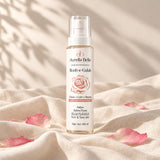
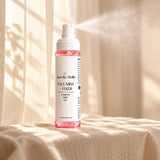
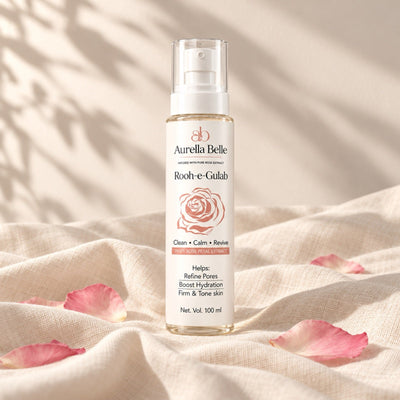
Rooh-e-Gulab is a rose water face mist and toner made with 99.5% rose petal extract, steam distilled. It is alcohol-free, with no parabens or silicones, and it is vegan and cruelty-free. It comes in a fine-mist spray. The 100 ml bottle is Rs. 379 and the 50 ml is Rs. 249.
Ask us for the full ingredient list and hold it up against the table above, the way you would any other bottle. We are not claiming it is the purest rose water on the market, because purity cannot be ranked from a label.
How to keep your rose water pure at home
- Close the cap after every use.
- Spray it; don't pour it onto cotton or your palm.
- Store it away from direct sunlight and heat.
- Use it within the period printed after opening.
- Throw it out if it turns cloudy or the smell changes.
Frequently asked questions
What is the purest form of rose water?
Steam-distilled rose flower water with no added alcohol, fragrance or colour, and only a minimal preservative.
What does 100% pure rose water mean?
It is a label claim, not a tested grade. Check that rose flower water comes first, and ask how the product is kept safe after opening.
Is natural rose water the same as pure rose water?
Not necessarily. A natural rose water can still be diluted or scented, so read the ingredients.
Is pure rose water pink?
Usually not. A strong pink colour is a reason to check the label for added dye.
Is rose water with a preservative still pure?
In any practical sense, yes. A small amount of gentle preservative keeps a distilled product safe.
Can I make pure rose water at home?
You can simmer clean, pesticide-free petals in distilled water, but it is not distilled and spoils quickly. Keep it in the fridge and use it within a few days.
Is Kannauj rose water the purest?
Kannauj has a centuries-old distilling tradition, but origin alone is no guarantee. Always check the ingredient list.
Sources
- Boskabady MH et al. "Pharmacological Effects of Rosa damascena." Iranian Journal of Basic Medical Sciences, 2011. PMC3586833
Related reading: Best rose water in India: our picks · Rose water for face: benefits and how to use it
More from the journal

What rose water does for your face, six ways to use it (including at night), tips for oily and dry skin, and the mistakes...
Read the guide
A skincare routine for beginners in three steps: cleanse, moisturise and sunscreen. What to use, in what order, and how to choose your first...
Read the guide
A simple skincare routine for oily skin: morning and night steps, how to adjust for Indian summers, monsoon and winter, and mistakes to avoid.
Read the guide