


Toner vs Rose Water: What's the Difference and Do You Need Both?

By the Aurella Belle team · Updated 29 October 2026
Written by the Aurella Belle team, makers of Rooh-e-Gulab rose water face mist and toner. The guidance applies to any brand.
Quick answer: The toner vs rose water question comes down to purpose. Rose water is one ingredient: a gentle, hydrating floral water. A toner is a product category that can contain anything from rose water to acids or alcohol. A pure, alcohol-free rose water can work as a mild hydrating toner, so most people do not need both.
Toner vs rose water: the basic difference
Rose water, or gulab jal, is made by distilling rose petals with water. The steam carries the scent and water-soluble parts of the petal, and what condenses is a light, fragrant water. That is all it is. A good one has a very short ingredient list.
A toner is a step, not an ingredient. The word covers a wide range of liquids you apply after cleansing. Some are simple hydrating waters. Some contain exfoliating acids such as glycolic or salicylic acid. Some older formulas contain a lot of alcohol to give a tight, "squeaky" feel. So when someone asks whether rose water is a toner, the honest answer is: it can be one, but not every toner is rose water.
What each one is designed to do
- Rose water: adds a layer of light hydration, helps skin feel refreshed and soft, and leaves a gentle floral scent.
- Hydrating toner: similar job to rose water, often with added humectants such as glycerin or hyaluronic acid.
- Exfoliating toner: contains acids that loosen dead surface cells so skin looks smoother. These need more care and are not for daily use on every skin type.
- Astringent toner: usually alcohol-based, designed to make skin feel less oily for a while. Many people find these drying.
Side-by-side comparison
| Pure rose water | Hydrating toner | Exfoliating toner | |
|---|---|---|---|
| Main job | Refresh and hydrate | Hydrate | Smooth texture |
| Typical ingredients | Rose distillate, sometimes a preservative | Water, glycerin, humectants, extracts | AHA or BHA, water, soothing agents |
| How often | Once or twice a day | Once or twice a day | A few times a week |
| Suits | Most skin types, including sensitive | Most skin types | Normal to oily skin, after a patch test |
| Can also be a face mist | Yes | Sometimes | No |
| Typical price in India | Rs. 150 to Rs. 500 | Rs. 300 to Rs. 1,200 | Rs. 500 to Rs. 1,500 |
Do you need both rose water and a toner?
For most people, no. If your rose water is pure and alcohol-free, it already does what a basic hydrating toner does. Using a second hydrating toner on top adds cost and another step without much extra benefit.
There are a few cases where using both makes sense:
- You use an exfoliating toner. On the nights you use an acid toner, you can skip rose water before it and use rose water in the morning instead. They do different jobs.
- You like rose water as a mist. Some people keep a hydrating toner for their routine at home and carry rose water to spritz through the day.
- Your skin is very dry. Layering rose water under a richer hydrating toner can help skin feel more comfortable in winter or in air-conditioned rooms.
If none of these apply, one product is enough. Put the money into a good moisturiser and sunscreen instead.
How to use rose water as a toner
- Cleanse your face and pat it mostly dry.
- Spray rose water from about 20 cm away, or pour a little on a cotton pad and sweep it over your face and neck.
- While your skin is still slightly damp, apply serum, then moisturiser.
- In the morning, finish with sunscreen.
Applying moisturiser on damp skin helps hold that hydration in. Rose water on its own evaporates fairly quickly, so do not leave it as the last step.
The India angle: climate, water and offices
Indian conditions change what your skin wants through the year. In humid months and the monsoon, many people find heavy creams and thick toners feel sticky, and a light rose water plus a gel moisturiser is plenty. In dry North Indian winters, the same skin may want an extra hydrating layer.
Hard water is common in many cities. It can leave skin feeling tight after washing. A splash of rose water after cleansing helps skin feel softer before you moisturise. Long hours in air-conditioned offices also dry the air around you, which is where a rose water mist at your desk helps skin feel refreshed.
How to choose a rose water that works as a toner
- Check the ingredient list. Look for rose distillate or rose flower water near the top, not "aqua, fragrance".
- Skip added alcohol. Denatured alcohol (alcohol denat.) can leave skin feeling dry.
- Avoid synthetic fragrance. Real rose water smells soft and slightly green, not like perfume.
- Prefer a spray bottle. It is more hygienic than dipping cotton into an open bottle.
- Look at the source. Steam-distilled petals are a good sign. Our guide to what "pure" rose water really means goes into more detail.
Where Aurella Belle fits
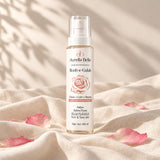
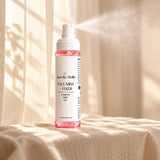
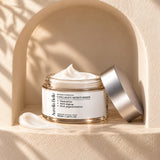
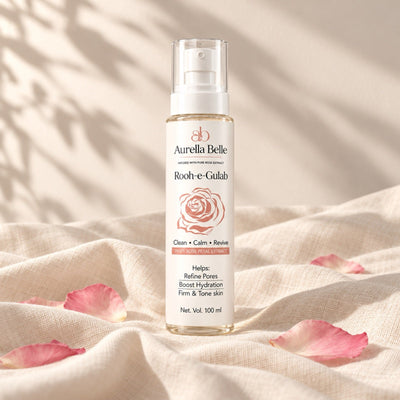
Our Rooh-e-Gulab rose water face mist and toner (Rs. 379 for 100 ml) is made with steam-distilled Centifolia rose petal extract, at 99.5% rose petal extract, and is alcohol-free. It is designed to be used as both a toner and a mist, so you do not need a separate product. There is also a 50 ml travel size at Rs. 249. If you want a simple pairing, The Hydration Duo combines it with our Collagen Moisturiser for Rs. 897.
Mistakes to avoid
- Using an alcohol-heavy toner and rose water together, then wondering why skin feels tight.
- Stacking several exfoliating products in one routine.
- Leaving rose water as the final step without a moisturiser.
- Using a bottle that has changed colour or smell. Rose water does not last forever once opened.
- Expecting rose water or any toner to clear acne or pigmentation. For those, see a dermatologist.
Patch test first
Even gentle products can disagree with some skin. Apply a little to your inner arm or behind your ear once or twice a day for a few days before using it on your face. If you see redness, itching or swelling, stop using it. If you have eczema, rosacea or very reactive skin, check with a dermatologist before adding a new toner.
FAQ
Is rose water a toner?
Pure, alcohol-free rose water can work as a gentle hydrating toner. It is not the same as an exfoliating or astringent toner, which contain other active ingredients.
Can I use rose water instead of toner?
Yes, if you only need hydration and a refreshed feel. If you specifically want exfoliation, you would need an acid toner, used a few times a week.
Can I use rose water and toner together?
You can. Apply the thinner product first. If one is an exfoliating toner, many people use rose water in the morning and the acid toner at night.
Is rose water good for oily skin?
Many people with oily skin like it because it is light and does not feel greasy. Follow it with a light gel or lotion moisturiser.
Does rose water need to be refrigerated?
Not usually, but a cool, dark place helps it stay fresh. A chilled mist can feel nice in summer. Check the label for its shelf life after opening.
Do I still need moisturiser after rose water?
Yes. Rose water adds a light layer of water, and a moisturiser helps keep it in your skin.
Sources
- American Academy of Dermatology: How to test skin care products
- American Academy of Dermatology: Face washing 101
Related reading: Rose water for face: benefits and how to use it · How to use face mist through the day
More from the journal

What rose water does for your face, six ways to use it (including at night), tips for oily and dry skin, and the mistakes...
Read the guide
A skincare routine for beginners in three steps: cleanse, moisturise and sunscreen. What to use, in what order, and how to choose your first...
Read the guide
A simple skincare routine for oily skin: morning and night steps, how to adjust for Indian summers, monsoon and winter, and mistakes to avoid.
Read the guide